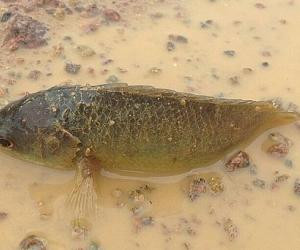
Leading scientists have said that the species of fish moving towards Australia may damage the wildlife in the area.
They said that the noxious climbing perch can move across land and choke birds. These fishes are travelling from Papua New Guinea to Australia and have already overrun two islands in the Torres Strait on Tuesday, according to James Cook University scientist Dr Nathan Waltham.It had already reached the Torres Strait islands of Boigu and Saibai, which are Ausrtralian territories and around five kilometers south of Papua New Guinea.
Waltham said, "We've only found them on Boigu and Saibai islands, islands closest to Papua New Guinea. They haven't been recorded any further south but the threat is if they aren't managed then they actually may move through the Torres Strait and into northern Australia."
The species is a noxious, exotic fish that is capable of surviving in land for several days as it can use its lungs to breathe. They said that the fish is aggressive and if eaten, it could kill birds and other fish. Efforts are underway to teach Torres Strait islander fishermen to stop the spread of these fish.
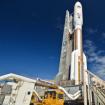
According to reports, the Space Coast is all set to resume rocket launch this week. A liftoff of an Atlas V rocket carrying the Air Force's next Global Positioning System satellite is scheduled for Wednesday at 11:36 am.
It has been said...

A new study by the Massachusetts Institute of Technology (MIT) has revealed that Istanbul lies...

The Michael J Fox Foundation is aiming to test wearable sensors in smart watches made by Intel's...
For the very first time, Tesla Motors has entered marketing and it is said to be the best and incredible incentive for owners and new buyers.
The electric car maker announced that ordering a new Model S before October 31st using a...

Rapid increase in private consumption by domestic consumers helped the Germany's economy to grow...

In an announcement made via a blog post, Tarek Abdalla - Google's Head of Marketing for Middle...

On Thursday morning, Macy's Inc. announced that it will close 14 retail stores as it is investing more in technology.
It is expected that the 14 stores will close by early spring. These stores had annual sales totaling $130 million and...

Leading globalphysicist Prof Stephen Hawking announced...

A video has been able to record about fifty sharks...

According to a new study, chimp hands are more evolved...

The American space agency NASA is seeking public ideas...
© 2011 AustrianTribune - Tribune Online Services. All times CET (GMT + 1.00).