


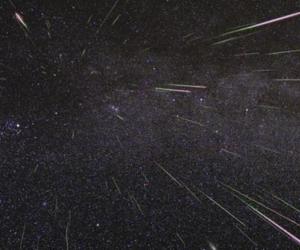
The Perseid meteor shower is the most widely observed and dependable of the yearly meteor displays. It is going to peak during the overnight hours of August 11 into the morning of August 12. This year, it has all the earmarks of becoming a spectacular show.
Firstly, there is going to be the situation about the moon. Initially it looks that the viewing conditions weren’t quite good, because the peak night is going to coincide with waxing gibbous moon, 63% illuminated. Undoubtedly, the bright light from it will disappear but the quite brightest of such fast streaks, which mainly will emit from out of the sky’s northeast part, will remain.
However, there is something to be happy about: the moon will set around 1 am local time on early Friday morning. Around the mid-northern latitudes the dawn starts at roughly 4:20 am. Between the two times, the sky is going to be totally dark for a roughly 3.5-hour ‘window’.
A gravitational assist from Jupiter, largest planet of our Solar System, is another reason why the Perseid may exhibit a better-than-average show in 2016.
Normally, evolution of most of the meteor showers takes place from comets. The Perseid’s cometary parent is a comet called Swift-Tuttle. The comet usually completes one trip around the sun in roughly 130 years. It was found in 1862 and appeared in our skied in 1992 last.
Comets mainly include frozen gases, and meteoroids mixed in with that gas, the bits and parts that have flaked off from the solid center or nucleus of the comet.
Alike other comets, Swift-Tuttle leaves behind flows of small particles ranging in size from huge sand grains to tiny pebbles, but possess consistency of cigar ash.
According to a report in SPACE by Joe Rao, "First, there is the situation regarding the moon. At first glance, it appears that the viewing conditions aren't very good, as the peak night coincides with a waxing gibbous moon, 63-percent illuminated. Its bright light no doubt will wash out all but the very brightest of these swift streaks, which chiefly will emanate from out of the northeast part of the sky."
Most meteor showers evolve from comets. The cometary parent of the Perseids is a comet known as Swift-Tuttle. This comet takes approximately 130 years to make one trip around the sun. It was discovered in 1862 and last appeared in our skies in 1992. (It's due back in 2126.) Comets are composed chiefly of frozen gases, and meteoroids that are mixed in with that gas — the bits and pieces that have flaked off from the comet's solid center or nucleus.
Most years when the Earth encounters the Perseids, observers in areas where the sky is very dark and clear might count as many as 60 to 90 meteors per hour. (But here's a necessary disclaimer: If you live in an area where haze, smoke and bright city lights proliferate, or tall obstructions block large areas of the sky, you will likely see a lot fewer.)
A report published in 9News informed, "The meteors are actually tiny dust and particles. The particles, many no bigger than a grain of sand or a pea, disintegrate as they blast into our atmosphere at 132,000 mph, making a brilliant flash of light, the American Meteor Society said."
Meteor showers are named for the constellation out of which they appear to come, said Vincent Perlerin of the American Meteor Society. Look for the constellation Perseus in the northeastern portion of the sky. It's just to the left of the Pleiades, the Seven Sisters constellation. It's also near the brighter, W-shaped constellation Cassiopeia.
According to a Monday report published by independent cybersecurity journalist Brian Krebs on his website Krebs on Security, cloud biggie Oracle was hit by a data breach within its retail unit.
The report, based on the information shared...

A new study by the Massachusetts Institute of Technology (MIT) has revealed that Istanbul lies...

According to a Monday report published by independent cybersecurity journalist Brian Krebs on...

In an announcement made via a Twitter post published last Thursday, Tesla Motors’ CEO Elon Musk said that the electric vehicle manufacturer has efforts underway to make changes to the radar system in its vehicles.
The changes being planned...

The drought conditions in California is widening economic split in California. The prospect of...

In a recently published blog post, tech giant Google has revealed that the superior intelligence...

In recent years, gender gap in pay has been a hot topic of discussion. On Wednesday, Amazon. com Inc said its female employees are paid equally as their male counterparts. The results which came from a recent survey were disclosed under pressure...

The Perseid meteor shower is the most widely observed...

A research paper published the journal Science has...

According to a Monday report published by independent...

A distant star, KIC 8462852, has been baffling...
© 2011 AustrianTribune - Tribune Online Services. All times CET (GMT + 1.00).


