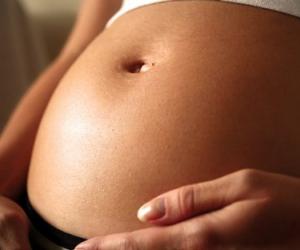
A study published in The American Journal of Pathology reports that the human placenta exhibits a differential response to infectious agents which reduce the expression of the multidrug transporters proteins in the placenta.
The study explains that the bacterial and viral infections differentially influence these transporter proteins in early and late pregnancy and may lead to infection-related pregnancy complications such as preterm birth and brain damage of the foetus.
The placenta protects the foetus from harmful substances such as glucocorticoids or toxins, in the maternal blood. Placental membrane-bound transporter proteins called the multidrug resistance proteins guards the foetus by returning these unwanted materials back to the maternal circulation.
Stephen G. Matthews, PhD, Professor, Department of Physiology, Faculty of Medicine, University of Toronto, Canada stated," Until this study, the extent to which bacterial and viral associated infection affects placental expression of ABC transporters at different stages of gestation in humans was largely unexplored".
The study analyzed placental tissues from patients undergoing surgical termination of pregnancy in the first trimester or from term elective caesarean deliveries in the third trimester. The placental explants were exposed to lipopolysaccharide (LPS), to simulate bacterial infection and to polyinosinic-polycytidyic (polyI: C)acid to simulate viral infection.
The researchers then examined the effect of bacterial or viral infection on two multidrug transporter proteins: P-glycoprotein and breast cancer resistance protein.
The findings suggest that infection and inflammation are capable of inducing changes in the levels of drug transporters. It is also noted that the placenta exhibits a differential response to infectious agents and this effect is greater for bacterial challenge compared to viral challenge.
Moreover, the first-trimester placenta appears to be more sensitive to the effects of bacterial infection than that in the third semester. Thus, bacterial infection leads to increased exposure of the embryo to drugs and toxins at a critical time in development, whereas viral infections may disrupt foetal protection in later stages of pregnancy.
The American space agency NASA is seeking public ideas on how to keep the astronauts at the Red planet safe.
It has been reported that the ‘Journey to Mars Challenge’ will give a $5,000 award to each of the three winning participants who...

A new study by the Massachusetts Institute of Technology (MIT) has revealed that Istanbul lies...

The Michael J Fox Foundation is aiming to test wearable sensors in smart watches made by Intel's...

On Wednesday, gold held on to overnight gains and was trading near its highest in a week. It was supported by a softer dollar, but rise in bond yields and uncertainty over the timing of a possible US rate hike kept the rally in check.
Spot...

Rapid increase in private consumption by domestic consumers helped the Germany's economy to grow...

The Google Glass Explorer edition is now available across the Google Play store across the US....

German retailer Metro AG witnessed a slow start to the Christmas season in its home market. But Metro affirmed that it is expecting 'satisfactory' Christmas trading as its operating profit was more than the expectations.
In the final...
On Wednesday, federal prosecutors sued a Manhattan...
On Monday, McDonald's CEO Steve Easterbrook, announced...
© 2011 AustrianTribune - Tribune Online Services. All times CET (GMT + 1.00).