


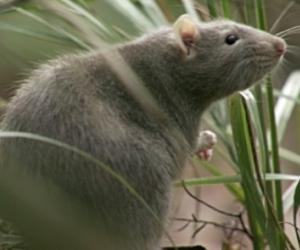
In an attempt to save birds and other native species of New Zealand, the county has decided to kill invasive animals that are affecting native wildlife. In a statement on Monday, New Zealand Prime Minister John Key said that the invaders are a problem for the country, and now they have to go.
New Zealand has planned to eradicate invasive species, including rats, possums and stoats, by 2050, Key added in the statement. The project has been named ‘Predator Free New Zealand’.
The project, the most ambitious conservation project in the world, isn’t going to be an easy one, but it can be achieved if New Zealand residents come together, said Key. He also said that the problem has even surpassed the country’s poaching and deforestation issue. These disease-carrying invasive predators have become a threat to the wildlife, he added.
This is not the first time when New Zealand has planned to wipe out the invasive species. Such a project was supported by late physicist Paul Callaghan, who compared the project with Apollo space program. But, finance was the major problem for it.
The country has already been spending more than $40 million every year to eradicate invasive animals, and the project has succeeded in more than 30% of its 220 islands of predators. In the Monday statement, Key said government and private sectors of New Zealand have to support the project financially to defeat the invaders which have been wiping out some iconic species of the country. He also said that $2.3 billion devoted to the new project.
In a different statement, Science and Innovation Minister Steven Joyce said, “For the first time, technology is starting to make feasible what previously seemed like an unattainable dream”.
According to a report in Post-Gazette by Karin Brulliard, "New Zealand, he said, has adopted the "ambitious goal" of eradicating its soil of rats, possums, stoats and all other invasive mammals by 2050. The name of the plan: Predator Free New Zealand."
"This is the most ambitious conservation project attempted anywhere in the world, but we believe if we all work together as a country we can achieve it," Mr. Key said in a statement, adding that invasive predators have surpassed poaching and deforestation as the biggest threat to New Zealand's wildlife. Mr. Key held a tuatara, a lizardlike native reptile, after announcing the plan, the Financial Times reported.
New Zealand already spends about $40 million a year on invasive species eradication programs, and it's cleared more than one-third of its 220 islands of predators. But Mr. Key suggested Monday that the traps, airdropped poison and fencing already in use haven't been cutting it.
A report published in Live Science revealed, "Before humans landed in New Zealand less than 800 years ago, precious few mammals lived on the islands - a vibrant archipelago that provided a home for flightless birds, such as the kiwi, takahe- and kakapo parrot, as well as geckos and lizard-like tuataras."
These introduced predators cost the New Zealand economy an estimated 3.3 billion New Zealand dollars ($2.3 billion) a year, he said. The costs stem partly from the crops these invasive species eat - for instance, rodents ate an estimated NZ$300 million ($211 million) in cereal and seed export earnings in 2013, a 2015 study in the journal BioScience found.
The government already invests NZ$60 million to NZ$80 million ($42 million to $56 million) in pest control every year, on top of the millions more given by local governments and the private sector, Key said. Some of this funding pays for traps, airdropped poison and fencing, but clearly more is needed to finish off the invasive predators, The Washington Post reported.
Nanomachines, an integral part of sci-fi that may be used to provide various benefits to the human body, are small machines or robots whose dimensions are measured in nanometer. Such devices have only existed in fiction so far.
But a...

A new study by the Massachusetts Institute of Technology (MIT) has revealed that Istanbul lies...

During the course of Thursday proceedings in the ongoing legal scuffle between Google and Oracle...

The vehicle recall proposal submitted by German automaker Volkswagen AG (VW) for 85,000 diesel-powered vehicles affected by the emissions-cheating scandal has been rejected by the California Air Resources Board
(CARB).
In rejecting...

The drought conditions in California is widening economic split in California. The prospect of...

According to an Engadget report, tech giant Google is working on a high-end standalone headset...

In recent years, gender gap in pay has been a hot topic of discussion. On Wednesday, Amazon. com Inc said its female employees are paid equally as their male counterparts. The results which came from a recent survey were disclosed under pressure...

Nanomachines, an integral part of sci-fi that may be...

In a latest discovery, an international group of...

Keeping the next generation on mind and to ensure that...

This study provides clear evidence that future of...
© 2011 AustrianTribune - Tribune Online Services. All times CET (GMT + 1.00).


