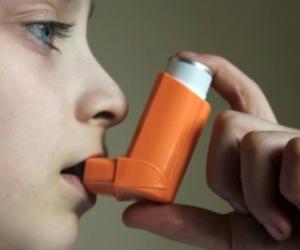
A study published on Monday in the Journal of the American Medical Association Internal Medicine claimed that if you are asthma patient and live near big or a larger number of fracking wells, which are unconventional natural gas development wells, there is 1.5 to four times more likelihood for you to suffer asthma attacks.
The study was performed by researchers at Johns Hopkins University along with Geisinger Health System. They conducted the study using electronic health records from 2005 to 2012 in north and central Pennsylvania. The records provided data for 27,000 asthma cases in which patients ages were 5 to 90. They found that 20,000 of them experienced mild attacks, while 1,800 suffered moderate attacks, and the figure for those who suffered severe attacks was 4,700.
In recent year, rapid unconventional natural gas development had been taking place in Pennsylvania. Over 6,200 wells were drilled from the mid-2000s to 2012. The study researchers assigned each well metrics based on location, depth, number, developmental phases and production volume and length data obtained from state departments.
Following, the researchers measured the wells and location of the asthma patients and made comparison between patients who had and did not have asthma attacks in the same year. They found link between increased risks of asthma attacks and close proximity of patients dwelling to the site with more or bigger natural gas wells.
The incidence of attack have association with all four stages of development that are well pad preparation, well drilling, stimulation and production. Asthma patients living close to wells that are in the production phase are going to be at greater risk as such well procedure continues for years.
"Going forward, everyone can learn from Pennsylvania's experience," said Brian S. Schwartz in a news release, the study's co-author and a professor in the Department of Environmental Health Sciences at Johns Hopkins.
According to a report in Ssat by ARIA HANGYU CHEN, "The researchers at Johns Hopkins University partnered with Geisinger Health System and conducted the study using electronic health records from 2005 to 2012 in north and central Pennsylvania."
Pennsylvania has seen rapid unconventional natural gas development in recent years, with more than 6,200 wells being drilled from the mid-2000s to 2012. The study researchers assigned each well metrics based on location, depth, number, developmental phases and production volume and length data obtained from state departments.
The current study does not explain the exact medical causes behind their findings, explained the study's lead author, Sara Rasmussen, a Ph. D. candidate at Johns Hopkins University. Residents living near natural gas wells are exposed to a variety of negative influences, such as psychosocial stress, noise, heavy truck traffic, sleep disruption and air pollution.
A report published in Tucson revealed, "Living near fracking sites may make asthma worse for many of those who suffer from the respiratory condition, a new study suggests. Fracking is a controversial process in which water, sand and chemicals are pumped deep into the ground at high pressure to extract hard-to-reach pockets of natural gas."
"The unconventional natural gas development process [fracking] has numerous environmental impacts that could affect health," said lead researcher Dr. Brian Schwartz. He is a professor of environmental health sciences, epidemiology and medicine at Johns Hopkins Bloomberg School of Public Health in Baltimore.
"Advice for how to minimize sleep disruption versus stress versus air pollution versus noise versus odors are all different," Schwartz said. "So, I think all we can do is to advise asthma patients in these areas is to be very vigilant about worsening of symptoms and have early discussions with their doctors."
Generally, a combination of two drugs is given by doctors for the treatment of gonorrhea. However, according to a new study, doctors might have to find an alternate option for treating this sexually transmitted disease (STD), since one of the...

A new study by the Massachusetts Institute of Technology (MIT) has revealed that Istanbul lies...

During the course of Thursday proceedings in the ongoing legal scuffle between Google and Oracle...

The vehicle recall proposal submitted by German automaker Volkswagen AG (VW) for 85,000 diesel-powered vehicles affected by the emissions-cheating scandal has been rejected by the California Air Resources Board
(CARB).
In rejecting...

The drought conditions in California is widening economic split in California. The prospect of...

With tech giant Google scheduled to launch the Play Store on the Chrome OS later this year to...

In recent years, gender gap in pay has been a hot topic of discussion. On Wednesday, Amazon. com Inc said its female employees are paid equally as their male counterparts. The results which came from a recent survey were disclosed under pressure...

Marine ecologist Neil Hammerschlag was conducting...

Johnny Tolliver, 52, had worked with the Berkeley Zero...

The bipartisan Comprehensive Addiction and Recovery Act...

Do you know your immune system might be influencing your...
© 2011 AustrianTribune - Tribune Online Services. All times CET (GMT + 1.00).