Rickard Ignell, a professor at the Swedish University of Agricultural Science, carried out a research in Ethiopia with the aim of finding a solution for prevention against malaria. This disease is an extremely important health concern across the nation. Every year, approximately 5 million cases of malaria arise in Ethiopia, with 70,000 proving fatal.
Ignell aimed to conduct his study in Western Ethiopia, where living space is shared by humans and animals. However, not much was evident over the interaction between mosquitoes and animals. It was not quite clear whether certain animals attracted or repelled mosquitoes.
Ignell’s purpose of the research was to find if this information might be of some use in prevention against mosquito bites in humans and spreading of malaria. His team undertook the investigation on Anopheles arabiensis, which is among the primary species of mosquitoes that carry malaria in sub-Saharan Africa. The team realized that while mosquitoes bit goats and sheep, chicken were not bit by them.
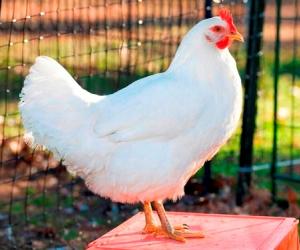
The team captured 1,172 Anopheles arabiensis, which had recently bitten someone, from three villages in Ethiopia. It was found that among the lot, only one had bitten chicken. The assessment revealed that it was not only that chickens were not bitten by mosquitoes, they were actually avoided by mosquitoes. The experiment by the team involved 6,706 volunteers sleeping with mosquito traps, with a couple of homes having a chicken in the cage by bedside.
Ignell revealed that on counting the mosquitoes that were trapped, it was seen that those houses that had a caged chicken by the bedside got less mosquitoes, suggesting an effective way to alleviate mosquito population at homes. A professor at the Johns Hopkins Malaria Research Institute, Conor McMeniman, stated that according to him the research paves way for a measure that can be successful in deflecting malaria-carrying mosquitoes, which hunt for human scent.
According to a report in Voa News by Jessica Berman, "Most mosquitoes, including those that carry the often-deadly malaria parasite, like to bite humans. They transmit the disease through a blood meal. They also take blood meals occasionally from cattle, goats and sheep. But they are selective feeders. Mosquitoes don’t like the taste of chicken blood, so poultry rarely gets bitten."
Swedish researchers made the discovery in field studies in Ethiopia. They set up traps to capture the most common mosquito in the area, Anopheles arabiensis, in 11 houses in Addis Ababa. Investigators then tested the blood inside the mosquitoes, finding blood from all sorts of animals. But rarely was there any blood from chickens.
According to Ignell, “One of the tests we did was to actually suspend a chicken next to the traps that we used. And we actually saw about a 95 percent reduction in the trap capture. Indicating that chickens and chicken odors alone could actually repel the mosquitoes from the houses.”
A report published in Tucson revealed, "Researchers found that one of the main mosquito species (Anopheles arabiensis) that transmits malaria in sub-Saharan Africa avoids chickens when looking for a meal of blood. The mosquitoes use their sense of smell to distinguish between chickens and animals they feed on."
"We were surprised to find that malaria mosquitoes are repelled by the odors emitted by chickens. This study shows for the first time that malaria mosquitoes actively avoid feeding on certain animal species, and that this behavior is regulated through odor cues," corresponding author Rickard Ignell said in a journal news release.
He noted that people in sub-Saharan Africa have suffered considerably for a long time because of malaria. And, mosquitoes are becoming increasingly resistant to pesticides. They have also changed their feeding habits, said Ignell, who's with the Swedish University of Agricultural Sciences in Alnarp.
Rickard Ignell, a professor at the Swedish University of Agricultural Science, carried out a research in Ethiopia with the aim of finding a solution for prevention against malaria. This disease is an extremely important health concern across the...

A new study by the Massachusetts Institute of Technology (MIT) has revealed that Istanbul lies...

During the course of Thursday proceedings in the ongoing legal scuffle between Google and Oracle...

The vehicle recall proposal submitted by German automaker Volkswagen AG (VW) for 85,000 diesel-powered vehicles affected by the emissions-cheating scandal has been rejected by the California Air Resources Board
(CARB).
In rejecting...

The drought conditions in California is widening economic split in California. The prospect of...

Security researchers from Ben-Gurion University Cyber Security Research Center (CSRC) have...

In recent years, gender gap in pay has been a hot topic of discussion. On Wednesday, Amazon. com Inc said its female employees are paid equally as their male counterparts. The results which came from a recent survey were disclosed under pressure...

A novel brain map has been developed on the basis of...

Toby Spribille fell in love with science at a young age...

Rickard Ignell, a professor at the Swedish University of...

A study, published last week, noticed a surge in number...
© 2011 AustrianTribune - Tribune Online Services. All times CET (GMT + 1.00).