It has been revealed by a study that about 25% of Europe's bumblebees are facing the risk of extinction because of loss of habitats and climate change. If bumblebees reach extinction then pollination of crops will come under threat and so as billions of dollars.
Intensive farming and climate change have been the major contributor for the plight of bumblebees. The International Union for Conservation of Nature warned on Wednesday that 24% of all 68 bumblebee species found in Europe are knocking on the door of extinction.
Also, it was found by the research that 46% of those are seeking a continuous decline in the population. There are only 29% of all bumblebee species that can be classified as stable and 13% are those that are actually witnessing a surge in their numbers. The status of remaining ones has not been figured out for some unknown reasons.
Bumblebees are very important for humans as they play a significant role in pollination and are a key link in the food chain. The IUCN said that three bumblebee species are among top five pollinators in Europe.
Urban development has contributed in decline of bumblebee population as it has resulted into the loss of habitat for the creature. Pollution from the agriculture waste has been another factor to force many bumblebee species to almost reach extinction.
"Protecting bumblebee species and habitats, restoring degraded ecosystems and promoting biodiversity-friendly agricultural practices will be essential to reverse the negative trends in European bumblebee populations", said Ana Nieto, the IUCN's European biodiversity officer, who coordinated the study.
The European Union's top environment official said that in order to increase the population of struggling bumblebees, the EU recently imposed a ban on the use of certain pesticides that threat bees. Besides, the government is funding research into status of pollinators, said EU Environment Commissioner Janez Potocnik in a statement.
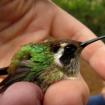
Researchers have developed a phylogenetic tree that traces evolutionary history of hummingbird. The study, which is quite an astonishing one unveiled that the diversification of hummingbird started 22.4 million years ago.
It diversified...

An EU-funded research project was launched by Berlin the previous week. This project was...

During the course of her address at Intel's Datacenter Day on Monday, Diane Bryant - general...

In a partnership which will enable German operator Deutsche Telecom (DT) to expand its network coverage, the company has joined forces with crowdsourced Wi-Fi Hotspot provider Fon for building what it claims will be the biggest Wi-Fi hotspot...

According to a latest report, the new Finance Minister Michael Spindelegger has recently...

French physicist Jean Bernard Léon Foucault created a Foucault pendulum in 1851. A lot of...
In a partnership which will enable German operator Deutsche Telecom (DT) to expand its network coverage, the company has joined forces with crowdsourced Wi-Fi Hotspot provider Fon for building what it claims will be the biggest Wi-Fi hotspot...
A new study has suggested that love hormone, oxytocin,...
A bionic kangaroo has been created by a team of...
Saturn's ice-covered moon Enceladus has an ocean of...
© 2011 AustrianTribune - Tribune Online Services. All times CET (GMT + 1.00).