
Main menu
You are here
Arctic Sea ice struggled tremendously to rebound in October
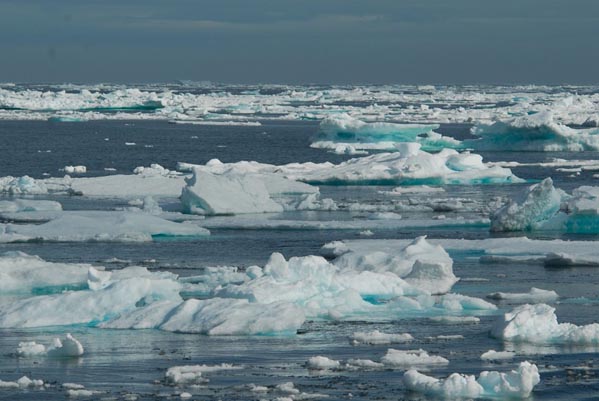
Adding to a lengthening list of evidence that the climate is changing, a new study revealed that Arctic sea ice struggled tremendously to rebound in October after shrinking to its second-lowest extent on record in the previous month.
Advent of the winter season and rapidly declining daylight typically equate to the growth of Arctic sea ice. After hitting its lowest level in early September, sea ice started recovering but the process slowed in October.
According to data compiled by Japan’s space agency and visualized by Zach Labe, a researcher at UC Irvine, regrowth of sea ice in the area was slowest on record during the period that included the end of October when sea ice did not grow at all.
Julienne Stroeve, a researcher at the National Snow and Ice Data Center, said, “There is a strong high pressure over Scandinavia which is helping to transport warm air from the north Atlantic towards the Arctic. Ocean temperatures are also quite a bit above normal especially in the Chukchi and East Siberian Sea so that is also contributing.”
At the end of October, massive areas of ice were missing in the western parts Beaufort and Chukchi seas north of Alaska as well as the Kara and Barents seas. Ted Scambos, a researcher at NSIDC, said that it seemed as if sea ice is nearly 965,000 sq. miles below the October average.
A separate study previously estimated that summer Arctic sea ice will be totally gone within next three decades, paving way for more volatile weather patterns and natural calamities like floods and droughts, unless carbon emissions are reduced rapidly.